Mastering the Seamless Pattern Ghost Halloween Aesthetic for Professional Designs
Creating a truly immersive atmosphere for seasonal events requires more than just standard decorations; it demands cohesive visual storytelling. The Seamless Pattern Ghost Halloween collection offers a sophisticated approach to this challenge, blending mystique with esoteric doodle clipart to elevate your design projects. Whether you are planning a terrible party that guests will talk about for years or developing commercial products for the autumn season, understanding how to properly utilize these assets is crucial. Many creators rush into using digital assets without fully grasping their technical potential, leading to missed opportunities for high-quality output. This guide explores how to leverage hand-drawn vector illustrations effectively, ensuring your curtains, pillows, tablecloths, and marketing materials stand out with professional polish.
Understanding the Versatility of Hand-Drawn Vector Assets
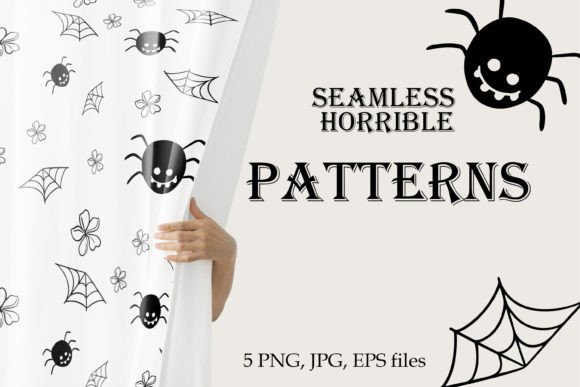
The core appeal of this pattern set lies in its duality: it is both whimsical and terrifying. The inclusion of elements like moons, horns, ghosts, zombies, cemeteries, coffins, skulls, spiders, webs, and crowns provides a comprehensive toolkit for horror-themed design. However, the true value is not just in the imagery but in the format. These illustrations are hand-drawn in vector, meaning they are mathematically defined rather than pixel-based. This distinction is vital for scalability. When you adjust the size of vector elements, you do not lose quality. This allows for seamless integration across vastly different mediums, from small greeting cards to large-scale bed linen and towels.
Many beginners overlook the importance of vector formats, assuming that any image file will suffice for printing. This misconception often results in pixelated, blurry outputs when designs are enlarged. By utilizing the EPS files included in the zip archive, you ensure that every line of your spider web or every curve of a ghost’s outline remains crisp, regardless of the final dimensions. This flexibility is essential for entrepreneurs and small business owners who need to adapt a single design concept for multiple product lines, such as napkins, sweets packaging, and glassware.
Common Mistakes in File Format Selection and Usage
One of the most frequent errors designers make is ignoring the specific strengths of each file type provided in the package. The archive includes five vector files in EPS, five elements in PNG format with transparent backgrounds, and five elements in JPG format at 300 DPI RGB. Using the wrong format for the wrong application can severely impact the professionalism of your final product.
- Misusing JPGs for Layered Designs: JPG files do not support transparency. If you attempt to place a JPG ghost over a colored background, you will end up with an unsightly white box around the image. This breaks the seamless illusion and looks amateurish on items like tablecloths or custom cards.
- Ignoring Vector Editability: Some users treat EPS files as static images, failing to ungroup or edit individual components. This prevents customization, such as changing the thickness of a cross or rearranging the elements of a cemetery scene to better fit a specific layout.
- Overlooking DPI Requirements: While the JPGs are provided at 300 DPI, which is standard for print, using them for large-format prints like curtains without checking the actual pixel dimensions can lead to resolution issues. Vectors are safer for large formats because they are resolution-independent.
To avoid these pitfalls, always start with the EPS files for any design that requires resizing or layering. Use the PNG files when you need quick, transparent assets for digital mockups or web-based invitations. Reserve the JPGs for simple, single-layer applications where transparency is not required, such as a solid-background social media post.
Maximizing Impact on Textiles and Home Decor
Applying the Seamless Pattern Ghost Halloween designs to home decor items like pillows, bed linen, and towels requires careful attention to repeat patterns. A common misunderstanding is that a single doodle clipart element is enough to create a fabric print. In reality, achieving a professional look involves creating a seamless tile where the edges match perfectly, allowing the pattern to repeat indefinitely without visible breaks.
When designing for textiles, consider the scale of the elements. A skull or coffin that looks striking on a greeting card may appear cluttered or overwhelming on a large tablecloth. Conversely, tiny spiders might get lost on a duvet cover. Test your designs by printing small samples or viewing them at 100% zoom on your screen to gauge visual balance. The black-and-white nature of these illustrations offers a stark, high-contrast aesthetic that works exceptionally well on white or light-colored fabrics, but it can also be inverted for dramatic effect on dark backgrounds.
For entrepreneurs selling handmade goods, this versatility is a significant advantage. You can create a cohesive collection where the same ghost motif appears on napkins, towels, and packaging, reinforcing brand identity. Ensure that you maintain consistent spacing and orientation of the doodles to create a harmonious flow across the fabric surface.
Enhancing Party Materials and Greeting Cards
Beyond textiles, these assets are perfect for paper goods and party accessories. Greeting cards, invitations, and labels for sweets glasses benefit from the intricate details of the hand-drawn style. However, a frequent oversight is neglecting the surrounding negative space. Crowding too many elements—such as horns, webs, and zombies—into a small card design can make it difficult to read and visually chaotic.
A better approach is to use one dominant element, such as a large ghost or a detailed cemetery scene, as the focal point, while using smaller doodles like crosses or spiders as subtle background accents. This hierarchy guides the viewer’s eye and enhances the mystical atmosphere without overwhelming the message. Additionally, since the files are in RGB, remember to convert them to CMYK if you are sending them to a professional printer for physical cards. Failure to do so can result in color shifts, although this is less critical for black-and-white designs, it is a good habit for overall color management.
Final Considerations for Quality and Satisfaction
Before finalizing your projects, take time to review the technical specifications and artistic coherence of your designs. Check that all vector paths are closed and clean to avoid printing errors. Ensure that the transparent backgrounds in PNG files are truly transparent and not filled with white pixels. By paying attention to these details, you maximize the utility of the Seamless Pattern Ghost Halloween set.
This collection is more than just a set of images; it is a resource for creating memorable, terrifyingly beautiful experiences. Whether you are a freelancer designing for clients, a blogger creating seasonal content, or a hobbyist preparing for a Halloween party, the key to success lies in thoughtful application. Avoid the temptation to use assets hastily. Instead, embrace the flexibility of vector graphics, respect the nuances of different file formats, and prioritize visual balance. By doing so, you will produce designs that are not only visually striking but also professionally executed, ensuring that your terrible party is terribly successful.