Integrating Planet Earth, Book, Kids and Tree Assets into Professional Creative Workflows
In the modern digital landscape, the efficiency of a creative project often hinges on the quality and versatility of its foundational assets. For designers, educators, marketers, and small business owners, sourcing high-quality visual elements is not merely about aesthetics; it is a strategic decision that impacts workflow speed, brand consistency, and final output quality. The Planet Earth, Book, Kids and Tree collection represents a curated set of digital graphics designed to bridge the gap between conceptual ideation and tangible production. By understanding how these vector-based elements function within a broader design ecosystem, professionals can streamline their processes and achieve superior results across various media.
Technical Foundations and Asset Compatibility
The utility of any digital asset begins with its technical specifications. This collection is engineered for maximum flexibility, originating from Adobe Illustrator, the industry standard for vector graphics. The core files are provided in SVG, JPG, and PNG formats, ensuring compatibility with a vast array of software platforms, from professional design suites like CorelDRAW and Affinity Designer to user-friendly tools like Canva and Cricut Design Space.
The artboard size of 12 x 12 inches at a resolution of 300 DPI in the RGB color palette is a deliberate choice that serves multiple purposes. While RGB is primarily associated with screen-based display, the 300 DPI resolution ensures that when these files are converted or used in print-ready workflows, they retain crisp edges and vibrant colors. The vector nature of the source files means that scalability is limitless. Whether you are designing a small icon for a mobile app or a large-format wall mural, the Planet Earth, Book, Kids and Tree graphics will not suffer from pixelation or loss of detail. This scalability is crucial for professionals who need to repurpose a single design concept across different mediums without recreating artwork from scratch.
Strategic Implementation in Educational and Publishing Projects
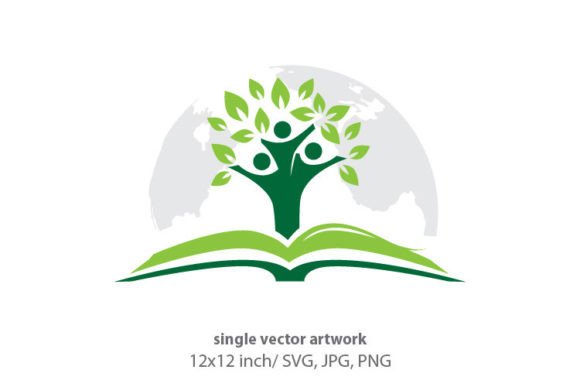
For educators, publishers, and content creators, thematic consistency is key to engaging audiences. The combination of planetary imagery, literary symbols, youthful figures, and natural elements creates a narrative-rich toolkit ideal for educational materials. When developing curriculum resources, children’s books, or learning aids, these assets can be integrated early in the planning phase to establish a visual tone.
Consider the workflow of creating an interactive e-book or a printed classroom poster. By utilizing the Kids and Tree elements, designers can construct scenes that promote environmental awareness or literacy. The vector format allows for easy manipulation of individual components. You might isolate the tree to create a background pattern or combine the child figure with the planet graphic to symbolize global citizenship. This modularity saves time during the execution phase, as designers do not need to draw complex illustrations manually. Instead, they focus on composition, typography, and layout, leveraging pre-made high-quality assets to accelerate production.
Furthermore, these elements interact seamlessly with other educational tools. They can be imported into presentation software for slide decks, used in learning management systems (LMS) as header images, or printed as flashcards. The consistency of the art style ensures that all materials look cohesive, reinforcing brand identity or institutional standards.
Enhancing Brand Identity and Marketing Materials
Small business owners and marketers often face the challenge of creating professional-grade marketing collateral with limited resources. The Planet Earth, Book, Kids and Tree collection offers a viable solution for brands focused on sustainability, education, family services, or community engagement. These graphics can serve as the backbone of a visual identity system, particularly for startups looking to convey values of growth, knowledge, and care.
In a typical marketing workflow, these assets can be employed during the brainstorming and prototyping stages. A marketer might use the SVG files to quickly mock up social media posts, email newsletters, or website banners. Because the files are vector-based, adjusting colors to match specific brand palettes is straightforward. This adaptability ensures that the graphics align with existing brand guidelines, maintaining visual harmony across all touchpoints.
For printed paper items such as brochures, flyers, and invitations, the high-resolution PNG and JPG files provide immediate usability. However, for large-scale prints like trade show displays or vehicle wraps, the original vector files should be used to ensure optimal print quality. This distinction is vital for quality control. By organizing assets properly—keeping vector originals separate from rasterized exports—teams can avoid common pitfalls such as blurry logos or distorted images in final outputs.
Crafting Physical Products and Handmade Items
The rise of the maker economy has increased demand for digital files that translate well into physical products. Crafters, jewelry makers, and stationery designers can leverage these graphics to create unique handmade items. The 12 x 12 inch artboard size is particularly compatible with standard cutting machines and printers used in home studios and small workshops.
When creating handmade cards, announcements, or party decor, the process often involves layering different materials. The Planet Earth, Book, Kids and Tree elements can be cut from vinyl, cardstock, or fabric using digital cutters. The clean lines of the vector paths ensure precise cuts, reducing material waste and improving the finish of the final product. For jewelry design, smaller elements from the collection can be scaled down and used as pendants or charms, demonstrating the versatility of the asset pack.
Efficiency in this context comes from preparation. Before starting a craft project, it is advisable to review the SVG files in a vector editor to simplify paths if necessary. This step ensures that cutting machines interpret the design correctly, preventing errors during production. Additionally, testing prints on sample paper helps verify color accuracy, especially since screen colors (RGB) may differ slightly from printed outputs (CMYK). Understanding this interaction between digital files and physical materials is essential for achieving professional results.
Workflow Optimization and Long-Term Asset Management
Integrating these digital graphics into a regular workflow requires more than just downloading files; it demands a systematic approach to asset management. Professionals should establish a organized folder structure that separates source files (SVG/AI) from export formats (PNG/JPG). This organization facilitates quick retrieval and reduces time spent searching for the right version of an asset during tight deadlines.
Moreover, considering the long-term use of these elements, designers should document how they are modified and reused. Creating a library of customized variations—such as different color schemes or compositional arrangements—can build a valuable internal resource. Over time, this library becomes a shortcut for future projects, allowing for rapid deployment of consistent visual themes.
Compatibility with web design is another critical factor. The SVG format is ideal for websites due to its small file size and scalability. Using the Planet Earth, Book, Kids and Tree vectors for icons, headers, or background elements can improve page load speeds and enhance user experience on both desktop and mobile devices. This technical advantage supports broader business goals related to SEO and user engagement.
Quality Control and Ethical Usage
While these assets are designed for ease of use, maintaining quality control remains the responsibility of the creator. Always review the final composition for balance and clarity. Ensure that text overlays are legible against the graphical elements and that color contrasts meet accessibility standards. For commercial projects, verify licensing terms to ensure compliant usage across all intended platforms.
By treating digital assets as integral components of a structured workflow rather than afterthoughts, professionals can elevate the quality of their output. The Planet Earth, Book, Kids and Tree collection provides the raw material; however, the value is realized through thoughtful integration, strategic planning, and meticulous execution. Whether you are designing a classroom poster, a brand logo, or a handmade gift, understanding the technical and creative potential of these vectors empowers you to work smarter, faster, and more effectively.