Atom Glyph Icon Sign: A Minimalist Vector Asset for Digital and Print Design
In the evolving landscape of digital interface design, clarity and simplicity often take precedence over ornate detail. The Atom Glyph Icon Sign represents a specific category of minimalist vector assets designed to communicate scientific, educational, or technological concepts with immediate visual recognition. For designers, developers, and content creators seeking a clean aesthetic, this type of iconography serves as a foundational element in user interfaces, marketing materials, and educational resources. Understanding the technical specifications, versatility, and appropriate use cases for such an asset is essential for determining whether it aligns with your current project requirements.
Understanding the Atom Glyph Icon Sign
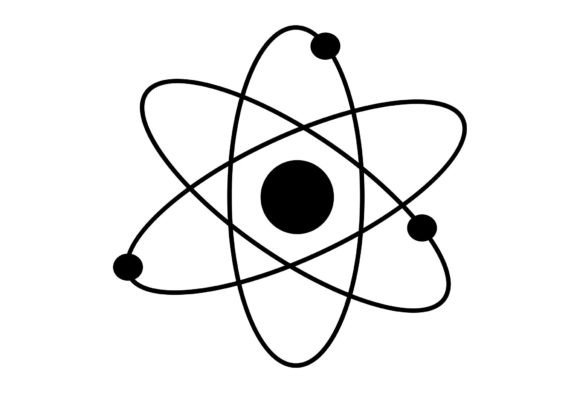
The Atom Glyph Icon Sign is a stylized representation of atomic structure, typically featuring a central nucleus surrounded by orbiting electrons. Unlike complex 3D renderings or photorealistic illustrations, this glyph adopts a flat, two-dimensional approach. This reductionist style is intentional, aiming to reduce cognitive load for the viewer while maintaining semantic meaning. As a minimalist icon design, it strips away unnecessary textures and shadows, focusing instead on line weight, balance, and negative space.
This particular asset is engineered as an aesthetic vector symbol, making it highly adaptable for use in Adobe Photoshop, Illustrator, and other graphic design software. Its primary value lies in its scalability and neutrality. Because it avoids trendy design elements that may quickly become dated, the atom glyph remains a timeless choice for brands and platforms that prioritize long-term usability and professional presentation.
Technical Specifications and File Formats
When evaluating digital assets for professional use, file format compatibility and resolution are critical factors. The Atom Glyph Icon Sign is provided in a comprehensive suite of formats to ensure seamless integration across various workflows. The package typically includes five distinct file types contained within a single ZIP folder:
- JPG: Ideal for quick previews or web use where transparency is not required.
- PNG: Supports transparency, making it suitable for overlaying on colored backgrounds or images without a visible bounding box.
- SVG: A scalable vector graphics format that ensures crisp rendering at any size, particularly important for responsive web design.
- EPS: A standard vector format compatible with most professional illustration software, allowing for easy editing of paths and colors.
- AI: Native Adobe Illustrator files, providing maximum flexibility for designers who need to modify the underlying vector structures.
The asset is delivered at a resolution of 512x512 pixels at 300 DPI. While 512 pixels is a standard dimension for digital icons, the 300 DPI specification ensures that the image retains high quality when printed on paper. This dual-purpose capability allows the same asset to function effectively as a textured image overlay for web banners and as a sharp, printable graphic for brochures or catalogues.
Practical Applications and Use Cases
The versatility of the Atom Glyph Icon Sign makes it a strong fit for a wide array of design projects. Its minimalist nature allows it to blend seamlessly into diverse visual identities without overpowering surrounding content. Below are several scenarios where this icon proves particularly effective:
Digital Interfaces and Mobile Apps
In mobile application design, screen real estate is limited. Icons must be instantly recognizable at small sizes. The simple artwork of the atom glyph ensures legibility even when scaled down for navigation bars or feature lists. It is an ideal graphic design element for educational apps, science-related tools, or technology startups looking to convey innovation and precision.
Web Design and Social Media
For websites and social media accounts, consistency is key to brand recognition. This icon can serve as a bullet point, a section divider, or a featured image thumbnail. Its clean lines complement modern web aesthetics, particularly those utilizing flat design or material design principles. Furthermore, the PNG and SVG formats allow for easy integration into HTML/CSS frameworks, ensuring fast loading times and sharp display on high-resolution Retina screens.
Print Materials and Marketing Collateral
Beyond digital screens, the high-resolution JPG and vector files (EPS/AI) make this icon suitable for print. Whether used on info cards, brochures, or product catalogues, the 300 DPI quality ensures that edges remain smooth and professional. It can act as a visual anchor in educational textbooks, scientific journals, or corporate reports discussing research and development.
Evaluating Fit: Benefits and Considerations
Before selecting the Atom Glyph Icon Sign for your project, it is important to weigh its benefits against potential limitations. A balanced evaluation helps ensure that the asset meets your specific goals.
Benefits:
- Scalability: Vector formats (SVG, EPS, AI) allow infinite resizing without loss of quality, future-proofing your design assets.
- Customizability: With editable vector files, you can easily adjust stroke width, color, and proportions to match your brand guidelines.
- Universality: The atom symbol is globally recognized, reducing the need for textual explanation in international contexts.
- Efficiency: Having multiple formats in one package saves time otherwise spent converting files or searching for alternative resolutions.
Considerations and Tradeoffs:
While the minimalist approach offers clarity, it may lack the visual impact required for certain high-energy marketing campaigns. If your design strategy relies on bold, colorful, or three-dimensional imagery, a flat glyph might appear too subdued. Additionally, because the atom is a common symbol, using a generic glyph may not provide unique brand differentiation unless customized significantly. Designers should consider modifying the color palette or combining the icon with unique typography to create a distinct visual identity.
Decision-Making Insights for Designers
Choosing the right icon involves more than aesthetic preference; it requires alignment with functional needs. If your primary goal is to create a clean, professional, and easily understandable visual cue for science or technology-related content, the Atom Glyph Icon Sign is a highly suitable choice. Its inclusion of both raster (JPG, PNG) and vector (SVG, EPS, AI) formats provides the flexibility needed for cross-platform deployment.
However, if your project demands highly detailed illustrations or specific artistic styles that deviate from minimalism, you may need to explore more complex icon sets or custom illustrations. For most standard use cases—such as mobile apps, website headers, business cards, and educational materials—this asset offers a robust, ready-to-use solution that balances form and function.
Ultimately, the value of this digital icon design element lies in its adaptability. By providing a neutral, high-quality base, it allows designers to focus on broader layout and user experience considerations rather than getting bogged down in creating basic symbols from scratch. For those building a cohesive library of modern digital assets, integrating such minimalist icons can streamline the design process and enhance the overall professionalism of the final output.